Artificial Intelligence
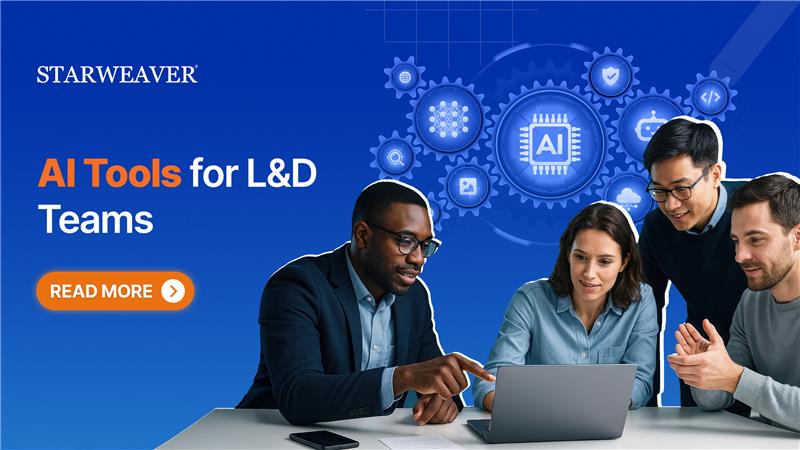
AI Tools Every L&D Team Should Know About (2026 Guide)
AI Tools Every L&D Team Should Know About
The conversation in most L&D teams has shifted. It is no longer "should we explore AI?" It is "which tools are worth our time and budget, and how do we get real results from them?"
The numbers reflect the urgency. 30% of L&D teams already use AI-powered tools, and 91% of those plan to increase their AI usage. Yet knowing that AI matters and knowing which tools to prioritize are two very different challenges. The market is crowded, the terminology is often opaque, and the gap between vendor promises and practical outcomes is wide.
This guide cuts through the noise. Below are the core categories of AI tools that enterprise L&D teams should have on their radar in 2026, what each one does, and what to look for when evaluating options.
Why AI in L&D Is No Longer Optional
Before diving into the tools, it is worth grounding the conversation in what is at stake. AI-based learning programs increased knowledge retention by 25% in 2024. Organizations leveraging AI-powered personalization in learning report a 57% increase in learning efficiency. And employees who receive more than five hours of formal AI training are 12 percentage points more likely to become regular users, meaning that how your team learns about AI directly shapes how well your organization adopts it.
These are not marginal gains. They are the kind of outcomes that move the needle on retention, productivity, and strategic capability. The right tools, used deliberately, make them achievable.
1. AI Content Authoring and Course Creation Tools
What they do: These platforms use generative AI to help L&D teams build course content faster, including scripts, slides, assessments, and interactive modules, without requiring deep instructional design expertise from scratch.
Why they matter: Content creation is one of the most time-intensive parts of the L&D function. AI authoring tools reduce development time significantly, allowing teams to keep course libraries current without waiting months for a vendor or internal team to build from zero.
What to look for: Ease of integration with your existing LMS, the ability to customize AI-generated output to match your brand voice and technical depth, and built-in quality review workflows so you are not publishing unvetted content at speed.
Tools to know: Articulate 360 (which has added AI-assisted content features), Adobe Learning Manager's authoring capabilities, and dedicated AI course builders that allow prompt-based content generation and rapid iteration.
2. AI-Powered Learning Management Systems and Learning Experience Platforms
What they do: A traditional LMS manages and tracks learning. An AI-powered LMS or LXP goes further, recommending content to individual learners based on their role, skills profile, learning history, and stated goals. It adapts in real time rather than following a static curriculum.
Why they matter: In 2026, employee training is shifting away from one-size-fits-all approaches through AI-driven personalized learning paths. An AI-powered platform is the infrastructure that makes personalization scalable across hundreds or thousands of employees.
What to look for: Skills tagging at the content level, integration with your HRIS and performance management systems, data privacy compliance, and the quality of the recommendation engine. Ask vendors specifically how their AI determines what to surface to which learner.
3. AI Coaching and Conversational Learning Tools
What they do: These tools simulate coaching conversations, provide real-time feedback on written or spoken communication, and offer learners a way to practice skills, such as sales conversations, leadership scenarios, or difficult feedback situations, in a low-stakes environment.
Why they matter: Generative AI is making coaching and personalization scalable. Once reserved for executives, digital tutors and real-time feedback tools can now support learners at every level of the organization. This democratizes access to high-quality, personalized development that was previously available only to senior leaders.
What to look for: The quality of the scenario design, whether the tool can be customized to your organization's context and language, and how it integrates coaching activity into broader performance data.
Tools to know: Platforms like Rehearsal and Second Nature for sales and communication practice, and AI tutoring tools built on large language models that can support on-demand learning assistance across topics.
4. AI Skills Intelligence and Learning Analytics Platforms
What they do: These platforms map your organization's current skills landscape, identify gaps relative to strategic priorities, and generate data-driven recommendations for learning investments. Some integrate with job market data to benchmark your workforce against industry trends.
Why they matter: AI-powered analytics can identify trends, spot areas for improvement, and adjust programs in real time. If a particular module is not achieving the desired results, AI can pinpoint the issue and suggest modifications. This gives L&D leaders the evidence base they need to make strategic decisions rather than relying on gut instinct or annual survey data.
What to look for: The breadth of the skills taxonomy, the ability to map skills to roles and business outcomes, and how frequently the platform updates its external benchmarking data.
Tools to know: Eightfold AI (talent intelligence), Gloat (workforce agility platform), Lightcast (labor market analytics), and skills intelligence layers built into enterprise LXPs.
5. AI Video and Microlearning Tools
What they do: These platforms allow L&D teams to create professional-quality video content, complete with AI-generated avatars, voiceovers, subtitles, and translations, without a production studio or video editing expertise.
Why they matter: 68% of employees say they prefer video-based learning over text-based materials, and 50% prefer training sessions that last 30 minutes or less. AI video tools make it fast and cost-effective to produce the short, visual content formats that employees actually engage with.
What to look for: The naturalness of AI-generated voices and avatars, the range of languages supported for global teams, and the ability to update content quickly as information changes without reshooting.
Tools to know: Synthesia (AI avatar video creation), HeyGen (AI video with multilingual output), ElevenLabs (AI voice generation for narration), and Canva's AI-powered design tools for visual learning assets.
6. AI Assessment and Adaptive Testing Tools
What they do: These platforms use AI to dynamically adjust the difficulty and type of assessment questions based on learner responses, providing a more accurate picture of actual knowledge than a static test. Some also generate assessment questions automatically from source content.
Why they matter: Standard multiple-choice tests measure recognition, not comprehension. Adaptive assessments surface real skill gaps and give L&D teams more actionable data on whether learning is actually transferring. They also reduce the time burden on learners by eliminating questions that are too easy or clearly out of range.
What to look for: Validity of the adaptive algorithm, integration with your LMS for seamless data flow, and whether the platform can auto-generate questions from your existing course content.
Tools to know: Questionmark (enterprise assessment platform), Learnosity (assessment API for embedded testing), and AI question-generation features within authoring tools like Articulate and iSpring.
A Note on Governance Before You Adopt
Before deploying any AI tool in your L&D stack, put governance structures in place. Ethical, human-centered governance must be intentional. Without structure and oversight, AI systems risk undermining trust, equity, and inclusion, especially in talent development pipelines.
That means defining who reviews AI-generated content before it reaches learners, how you handle data privacy across platforms, and how you communicate AI's role in learning decisions to employees. Governance is not a barrier to adoption. It is what makes adoption sustainable.
============================================================
How Starweaver Goes Beyond AI Tools
AI tools accelerate the how of learning. But they cannot replace the what: the depth of content, the credibility of instruction, and the strategic architecture of a training program that actually moves the needle on performance.
Starweaver operates at the strategic intersection of content creators, learning platforms, enterprise organizations, and universities. As a technology-enabled educational tools provider and content engine, we supply the essential infrastructure, data analytics, and AI-powered platforms that enable leading institutions and corporations to produce, distribute, and optimize high-quality digital learning at unprecedented speed and scale.
If you are exploring bespoke educational content solutions for your organization, we would welcome the opportunity to share insights from our work across industries.
Contact Us to continue the conversation.
Frequently Asked Questions
What are the most important AI tools for L&D teams in 2026?
The most impactful AI tools for L&D teams span six categories: AI content authoring platforms, AI-powered LMS and LXP systems, AI coaching and conversational practice tools, skills intelligence and analytics platforms, AI video and microlearning tools, and AI-driven adaptive assessment platforms. The right combination depends on your team's current technology stack, budget, and the specific capability gaps you are trying to close.
How is AI changing the role of L&D professionals?
AI is shifting the L&D function from content production and administration toward strategy and curation. Routine tasks like content drafting, assessment creation, and scheduling are being automated, freeing L&D professionals to focus on skills architecture, learning culture, and measuring business impact. The role is becoming more analytical and more strategic, not smaller.
How do I evaluate which AI learning tools are right for my organization?
Start with a clear problem statement before evaluating any tool. Define what outcome you are trying to improve, whether that is content velocity, learner engagement, completion rates, or skills gap measurement. Then assess tools against integration requirements with your existing HR and LMS infrastructure, data privacy compliance for your region and industry, and the quality of vendor support for implementation and change management.
Are AI-generated training programs as effective as human-designed ones?
AI-generated content works best as a starting point, not a finished product. The most effective enterprise training programs combine AI speed and personalization with human expertise for quality control, context-setting, and instructional depth. Organizations that treat AI as a tool to augment instructional designers, not replace them, see the strongest outcomes.
What is the risk of adopting AI tools in L&D too quickly?
The primary risks are content quality issues if AI output is not reviewed before publishing, data privacy exposure if platforms are not properly vetted, and learner trust erosion if AI-driven personalization feels opaque or arbitrary. A phased adoption approach with clear governance, a defined review process, and transparent communication to employees significantly reduces these risks.
Share this Blog:
Previous
The AI Acceleration Gap: Why Your Workforce Strategy Is Already Behind (And the 3 Steps to Catch Up)
Next
Why Professional Learning Changed More in 2 Years Than the Previous 20 and What It Means for Your Career
Related blogs
What 'AI-Ready' Actually Means for Your Workforce in 2026
AI-ready does not mean everyone uses ChatGPT. Here is a clear, practical definition of workforce AI readiness in 2026, and what it actually takes to get there.
June 19, 2026
Read more
How to Create AI Training Content 5x Faster- A Complete Guide
Discover the 5 AI-powered techniques L&D teams use to build enterprise training content 5x faster without sacrificing instructional quality or learner outcomes.
May 29, 2026
Read more
1
