Artificial Intelligence
The Career Pivot Playbook: How to Change Direction Without Losing Momentum
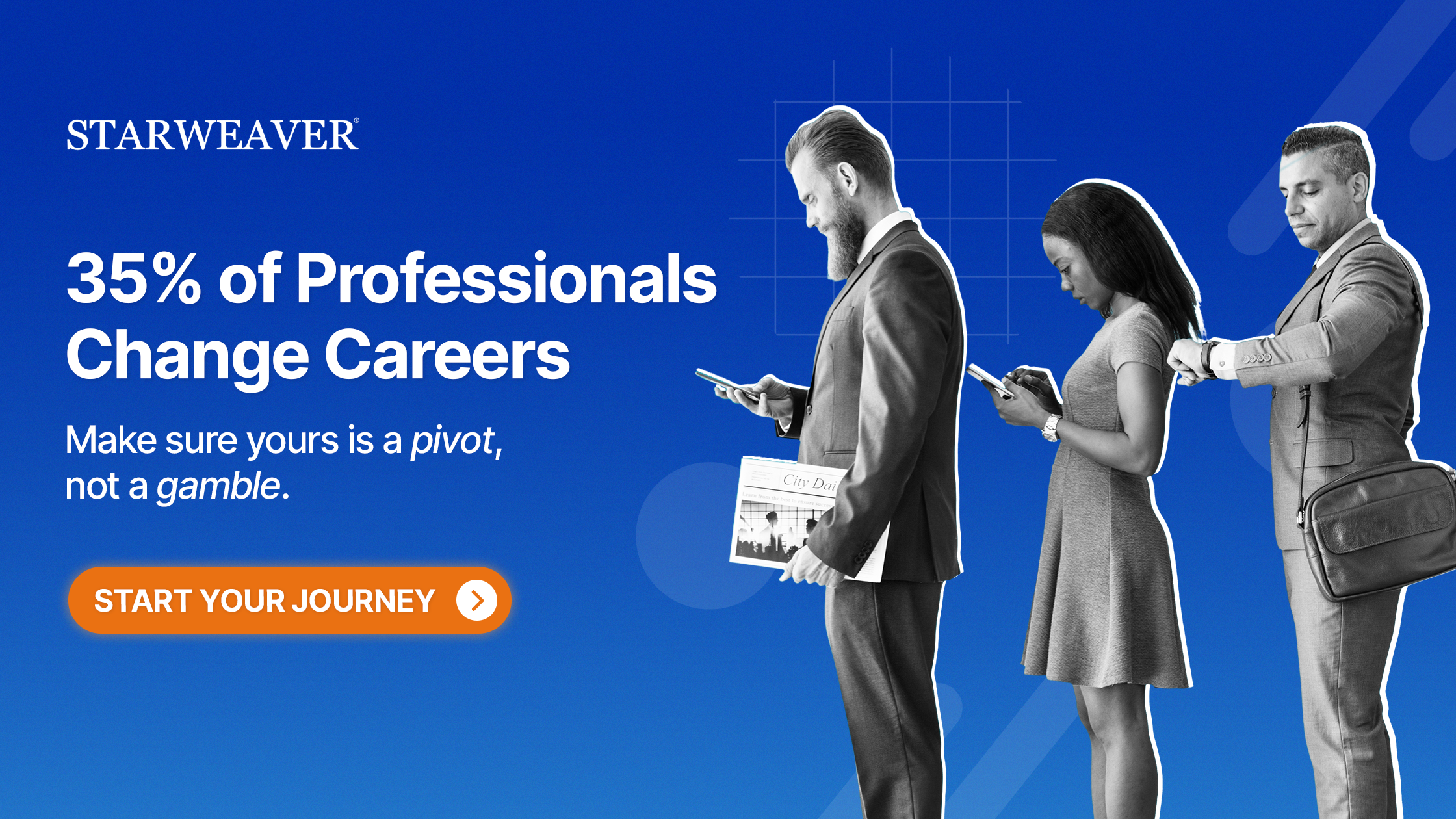
35% of Professionals Change Careers. Most Struggle With the Same Thing.
Here's a number that might surprise you- or maybe it won't.
According to the World Economic Forum, 35% of professionals change careers at least once during their lifetime. Not jobs. Careers. Entirely new directions, different industries, fresh starts.
That's more than one in three people making a fundamental shift in what they do for a living. And yet, when most of us think about career changes, we imagine it as rare. Risky. Something other people do. The truth? Career pivots are more common than ever. The question isn't whether people change directions, it's whether they do it with intention or just hope for the best.
Why People Make the Leap
Career changes aren't signs of failure. They're signs of evolution. People pivot for countless reasons, but a few themes come up again and again.
Seeking new challenges. The role that once stretched them now feels small. The learning curve flattened, and so did the excitement.
Chasing growth. They hit a ceiling, whether in title, compensation, or impact, and realized the only way up was out.
Finding alignment. Values shift over time. What mattered at 25 doesn't always matter at 35. When work stops aligning with who you've become, something has to give.
Pursuing passion. That thing they always wanted to try? It stopped being "someday" and started being "why not now."
Adapting to change. Industries evolve. Roles disappear. New ones emerge. The smartest professionals don't just react to change, they anticipate it.
None of these reasons are failures. They're recalibrations. And they're more normal than most people admit.
The Real Obstacle Isn't What You Think
Here's what no one tells you about career transitions: the hardest part isn't starting. It's knowing where to go. The biggest obstacle isn't skill. It's clarity. Most people considering a career change aren't lacking ambition. They're lacking direction.
"I know I want something different, but what?"
"Where do I even begin?"
"How do I connect what I already know to where I want to be?"
Sound familiar? Without a clear path, ambition turns into confusion. Motivation fades into overwhelm. That exciting "what if" becomes a frustrating "I don't know how."
This is where most career changers get stuck. Not at the starting line, but in the fog before it.
Clarity Isn't a Luxury. It's the Foundation.
If you're thinking about a career pivot, the first step isn't updating your resume. It's answering four questions honestly.
What skills do I already have? You're not starting from zero. Your experience has given you transferable skills- communication, problem-solving, leadership, technical abilities, that apply across industries. Identify them.
What skills do I need to build? Every new direction requires new capabilities. The gap between where you are and where you want to be is measured in skills. Name them specifically.
What roles align with where I want to go? Don't just chase titles. Understand what the work actually looks like day to day. Research. Talk to people. Get concrete.
What's the shortest path from here to there? Not the easiest path, the most efficient one. The one that builds momentum without wasting years on detours.
When you can answer these questions, the fog lifts. The path becomes visible. And suddenly, a career change feels less like a leap of faith and more like a series of intentional steps.
The Best Time to Start Was Yesterday. The Second Best Time Is Now.
Waiting for the "perfect moment" to change careers is a trap. There will always be a reason to delay, financial concerns, family obligations, market uncertainty, imposter syndrome whispering that you're not ready.
But here's the reality: readiness isn't a feeling. It's a decision. You don't need to have everything figured out before you take the first step. You need enough clarity to know the direction, and enough commitment to start walking. The details fill in along the way. The confidence builds through action, not before it.
Every month you spend stuck in "thinking about it" is a month you could have spent moving toward it. Progress beats perfection. Always.
Treat Your Career Like a Journey
The professionals who navigate career transitions successfully share one thing in common: they treat their career like a journey, not a destination.
Every journey needs a route. A map. Checkpoints along the way. They don't just "figure it out as they go." They design their path with intention, identifying where they're headed, what they need to get there, and how they'll know when they've arrived. This is the difference between wandering and progressing. Between hoping and planning.
That's exactly why we created Journeybuilder - a platform designed to help you map your career journey step by step, with AI-powered guidance that adapts as you grow. Your career is a story only you can write. But even the best stories need structure. A beginning, a middle, and a direction that pulls you forward.
Your Next Chapter Starts With a Clear Path
If you've been feeling the pull toward something new- a different role, a new industry, a fresh challenge- don't ignore it. But don't rush blindly into it either. Start with clarity. Map your skills. Identify the gaps. Plot the route forward.
And if you're not sure how to connect the dots on your own, Journeybuilder can help. It assesses where you are, understands where you want to go, and builds a personalized learning path that evolves with you, curating videos, podcasts, flashcards, quizzes, and expert-verified content at every step.
The technology for hyper-personalized career guidance isn't coming. It's here.
Your Career Pivot Doesn't Have to Be a Gamble. It Can Be a Plan.
Too many professionals treat career changes like lottery tickets, close your eyes, make a wish, hope it works out. But hope isn't a strategy. And uncertainty doesn't have to be your starting point. With Journeybuilder, your next move becomes intentional. You'll see exactly which skills to build, which milestones to hit, and which steps to take, all laid out in a living journey that updates as you progress. No more guessing. No more wandering. Just a clear path from where you are to where you want to be.
Your career pivot deserves more than luck. It deserves a plan.
==================================
Starweaver operates at the strategic intersection of content creators, learning platforms, enterprise organizations, and universities. As a technology-enabled educational tools provider and content engine, we supply the essential infrastructure, data analytics, and AI-powered platforms that enable leading institutions and corporations to produce, distribute, and optimize high-quality digital learning at unprecedented speed and scale.
If you're exploring bespoke educational content solutions for your organization, we'd welcome the opportunity to share insights from our work across industries. Contact Us to continue the conversation.
Share this Blog:
Previous
AI Won't Replace Finance Jobs. But This Will
Next
The Great Decoupling: From Machine Learning to Agentic Intelligence
Related blogs
What 'AI-Ready' Actually Means for Your Workforce in 2026
AI-ready does not mean everyone uses ChatGPT. Here is a clear, practical definition of workforce AI readiness in 2026, and what it actually takes to get there.
June 19, 2026
Read more

How to Create AI Training Content 5x Faster- A Complete Guide
Discover the 5 AI-powered techniques L&D teams use to build enterprise training content 5x faster without sacrificing instructional quality or learner outcomes.
May 29, 2026
Read more
1
